
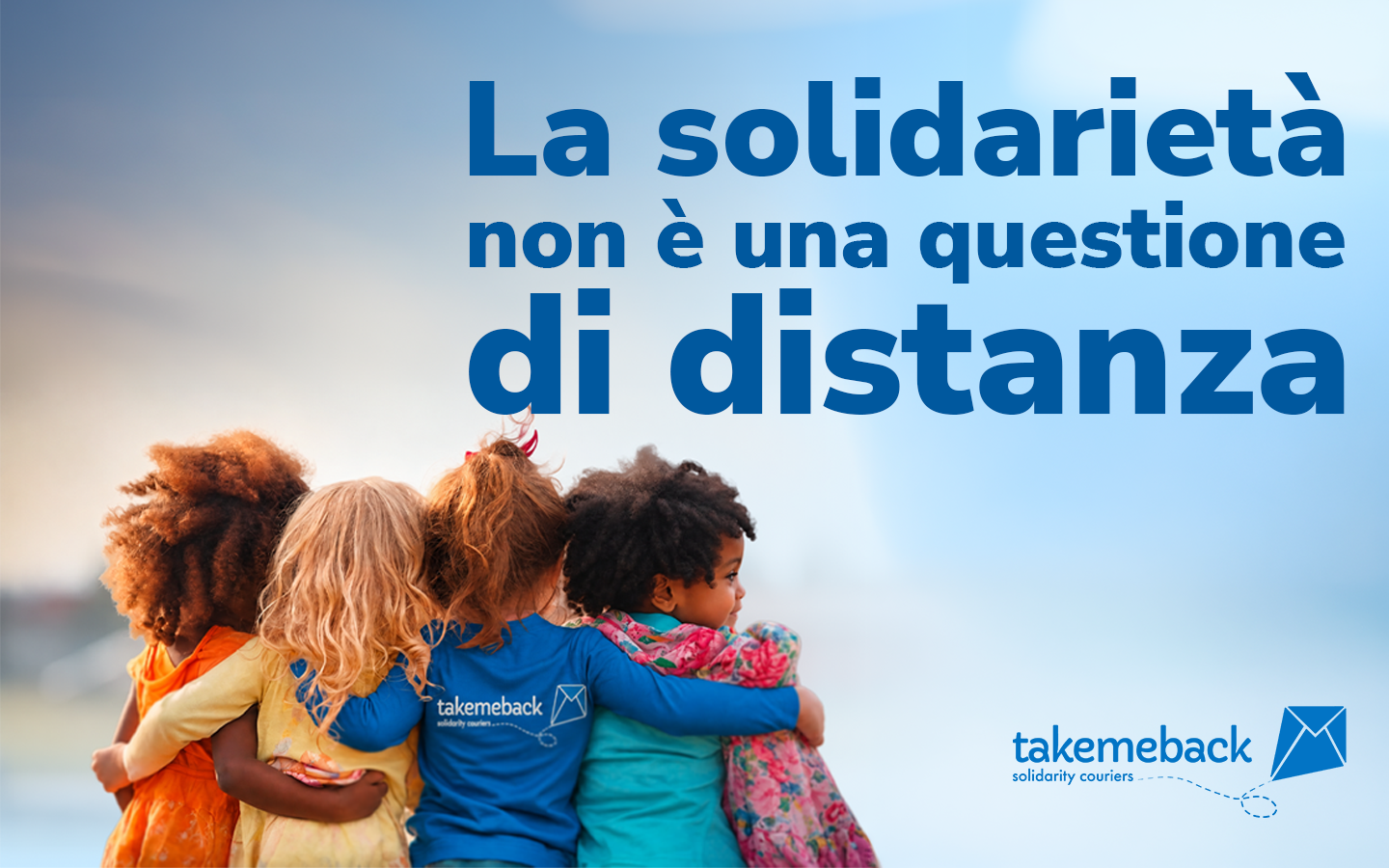
Why Geography Should Not Determine the Limits of Our Responsibility
There is a geography that does not appear on maps.
It is the geography we map out every time one story touches us while another remains in the background. We may be moved by a child who lives thousands of kilometers away from us and fail to notice the poverty we encounter along the way. Or, we may do the opposite, convinced that we must first and foremost take care of those who live right next to us.
In both cases, distance ceases to be a measure and becomes a moral criterion. Solidarity, however, has no (or should have no) territorial jurisdiction.

The Rhetoric of Proximity
“Why help those far away when there are people in need right here among us?”
It’s a comment we’ve heard many times. A hierarchy that seems to follow a principle of common sense, almost a natural order of things: first what is close, then what is far away.
Yet, upon closer inspection, this argument reveals a contradiction.
Geographical proximity does not necessarily mean human closeness. Sharing a city, a language, or citizenship does not mean sharing the same living conditions, just as living on different continents does not necessarily imply a lack of mutual responsibility.
The problem is not recognizing the importance of local solidarity. It would be absurd to deny it. The problem arises when proximity is transformed from a possibility into an exclusive obligation, when the place where a person lives becomes a prerequisite for determining whether or not they deserve our help.
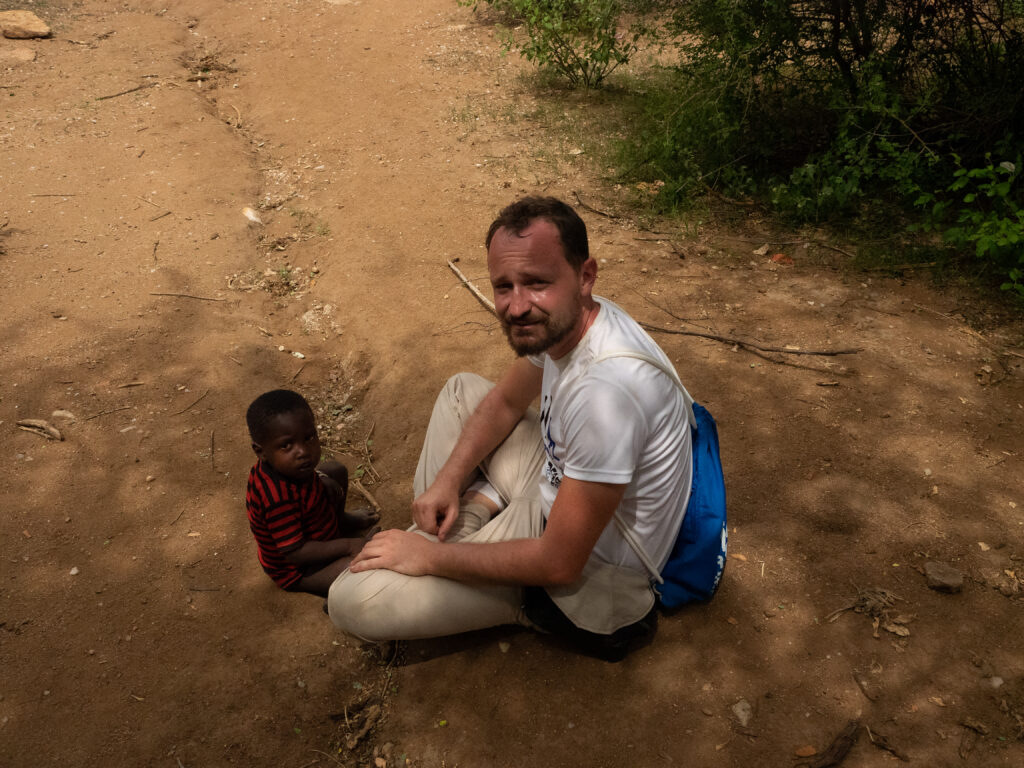
Every child is at the center of their own world
When we think of a village in Sri Lanka, we tend to imagine it as a remote place. We look at it from our own perspective, almost unconsciously assuming that the center is right here with us.
For a child living in that village, however, the distances that really matter are different: the journey to school, the time it takes to reach a health clinic, and the gap between what the child wants and the opportunities available to him or her.
His life does not take place “far away.” It takes place where he was born, where his relationships grow, where his future takes shape. We are accustomed to viewing the world from our own perspective, unconsciously treating the place where we live as the center. Everything else becomes the periphery—gradually more distant, less familiar, and sometimes less relevant.
Every child is born at the center of their own world. It is the gaze of others, if anything, that pushes them to the margins.
Solidarity as a Way to Overcome Boundaries
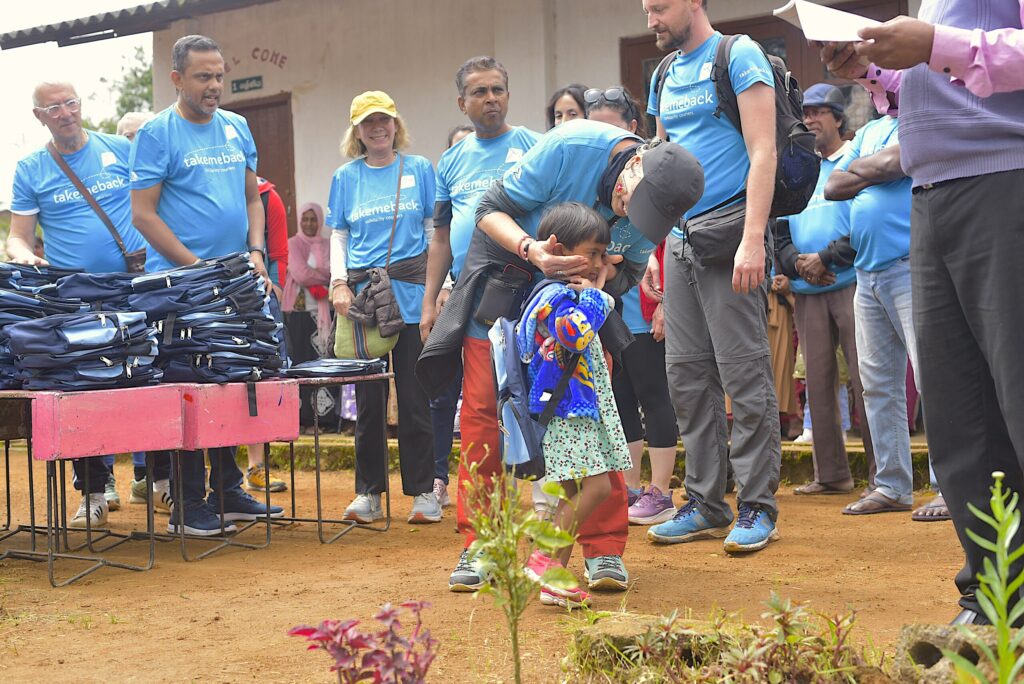
When TakeMeBack chooses to operate in Sri Lanka, Tanzania, Kenya, or Thailand, it is not implying that those countries are more important than others.
He is recognizing something much simpler: a need does not become any less real just because it manifests itself far away from us.
Solidarity does not necessarily have to be based on a sense of belonging. It is not essential to identify with someone’s language, culture, or nationality in order to care about their well-being. Helping a distant community does not mean taking attention away from a nearby one. These two forms of solidarity are not mutually exclusive. They can coexist and even reinforce one another.
Of course, distance can pose a real challenge. Reaching a community on the other side of the world requires time, resources, organization, and knowledge of the area. But there is a substantial difference between recognizing an obstacle and turning it into an excuse.
When we say that a problem is too far away to concern us, we are not simply describing a distance. We are establishing the limit within which we are willing to exercise our responsibility.
And yet, we live in a world where goods cross continents, information travels instantly, and economies depend on one another. We readily accept that an item purchased right around the corner may have been manufactured thousands of kilometers away.
We have globalized consumption, but we continue to debate whether it is appropriate to globalize responsibility.
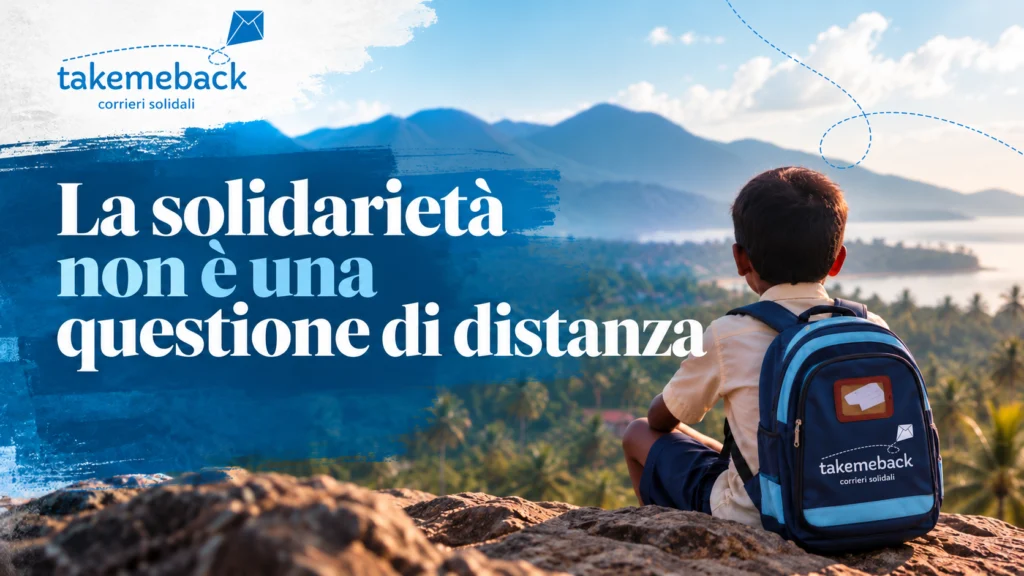
… but it’s a matter of perspective
Solidarity begins when we recognize that someone else’s life matters to us, even if it is different from our own and takes place elsewhere.
The limits of our capabilities are inevitable. They must not become the boundaries of our sensitivity. Because there are distances we can measure in kilometers, and others we create through our beliefs.
The first ones pertain to geography.
The latter, much more often than not, depend on us.